Matt Elphick
Beneath the Bucolic
An interview with Matt Elphick
Part of The Psithur Project
Matt Elphick writes dark fantasy and folk horror, drawing on the folklore, mythology and landscapes of the English countryside. In this conversation, he explores the childhood stories that first drew him towards folk horror, the role of landscape in creating a sense of threat, and his fascination with the hidden worlds that exist beneath the familiar.
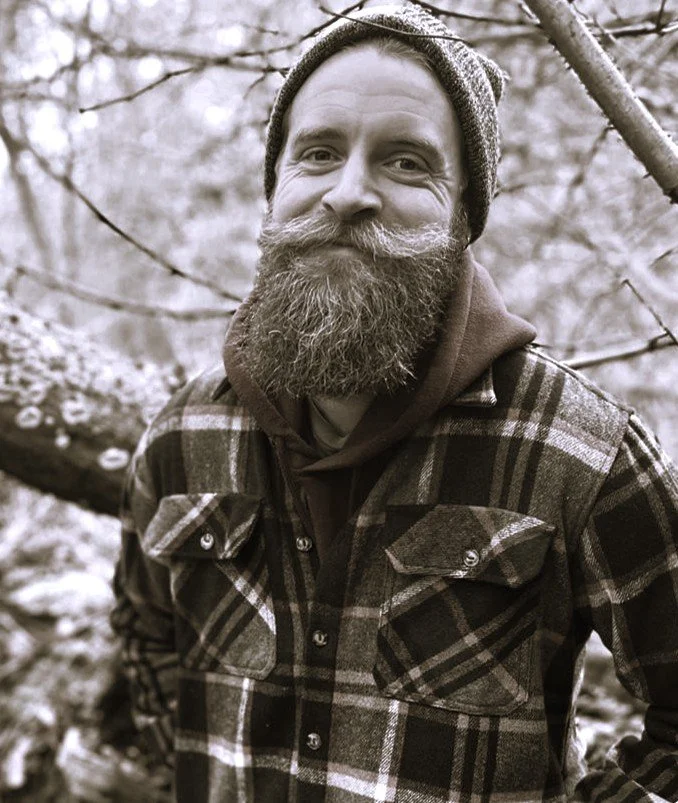
Matt’s short story Old Man Apple will be featured in Pynewood’s upcoming anthology, Psithur, set for release in Jan 2027.
What drew you to writing Folk Horror stories?
Like many of the things that we are drawn to as adults, my love of folk horror has its roots in my childhood. I grew up in the Cotswolds and spent a lot of time mucking about in the woods, something that was encouraged by my dad running a sawmill. I spent a lot of time wandering about with both Dad and Grandad, and they’d tell me stories as we walked.
Some of these would be well known pieces of local lore, such as the crossroads known as Betty’s Grave, where a witch is supposedly buried, and strange things are still reported to take place. Others would be made up just for me, like the Loch Ness Monster-like creature that lived in the local lake, or the time that something grabbed Dad’s ankle when he was exploring a local crypt. Mixed in with the stories would be snippets of country wisdom – how dock leaves will cure nettle stings; how lots of berries in autumn mean that we’re due a harsh winter; the magpie rhyme (one for sorrow, two for joy); red sky at night; shepherds’ delight, etc.
This all fascinated me because it spoke of something beyond the seen, that there were a hidden set of laws behind what I could see, a hidden world almost. A world where the dead could interact with the living, and plants and the weather could divine the future. In truth, it also terrified me, but that frisson of fear only added to the fascination.
Folk horror, and my obsession with folklore, allows me to reconnect with a time in my life when I was less jaded and more open to wonder. In many ways I’m just continuing the story telling tradition of my Dad and Grandad. The only difference, really, is that I write them down and share them with the wider world.
How does the landscape play into your stories?
From a writerly point of view, setting is incredibly important to horror stories. It’s not just where the story takes place but, in many cases, is an antagonist in its own right. It can be a physical threat to the protagonist(s) with terrain, flora and fauna, or the weather threatening harm. It also functions to prevent the protagonists from making an easy escape or being rescued. Part of the thrill of horror is discovering how the characters survive (or will they?) whatever challenge they face. If they can just call for an immediate rescue, or get in a car and drive away, there’s no real sense of danger or threat. Starve Acre by Andrew Michael Hurley takes place in the Yorkshire Dales in the dead of winter with deep snow drifts cutting the characters off from the outside world. Adam Nevill’s Monumental takes place in a valley on the Devon coast, only accessible by canoe at high-tide.
Sometimes the thing trapping the characters in a setting isn’t just physical. We see this in The Hill in the Dark Grove by Liam Higginson, where the characters are effectively trapped at their rural Welsh farm by a sense of tradition as well as emotional ties (although there are physical restraints in place too). In my own story, ‘Old Man Apple’, it’s very much this emotional tie, in the form of a deep sense of grief, that keeps the unnamed protagonist from leaving.
A common convention of folk horror is inverting the bucolic stereotype of rural life. A great, and widely known, example of this can be seen in the film Hot Fuzz. The town of Sandford is a cliché of a rural parish town. With its flagstone streets, model village, and quaint shops it wouldn’t look out of place on a chocolate box. Yet, beneath this polished exterior, the residents are committing atrocious acts of violence to keep the town the way they like it. To put further emphasis on this, the protagonist tends to be from outside the community, so we get to see the scales fall away from their eyes in real-time, as the truth is exposed. We get this with Ned in Thomas Tryon’s Harvest Home, with Neil Howie in The Wicker Man, and with Mark, the protagonist in my story ‘Cooper’s Hill’, who gets to discover the “real” tradition behind the annual cheese rolling.
On a personal level, I just love the British countryside, particularly the area around Gloucestershire and Wiltshire. I don’t live there anymore, but I’m lucky enough to spend a lot of time there and it will always be my home. It’s truly awe inspiring to look out across a rolling patchwork landscape of fields, the shadows of clouds cloaking some in drifting darkness, copses and farms dotting the view like pins in a map. And the sky. It seems so vast and so close. I will take any excuse to weave it, and memories of places from my childhood, into my stories.
More from The Psithur Project
Next week we feature Yvette Chan, author of Awaking.