yvette chan
Writing Outside the Rules
Part of The Psithur Project
Yvette Chan reflects on Gertrude Stein, language and identity in this week’s author focus.
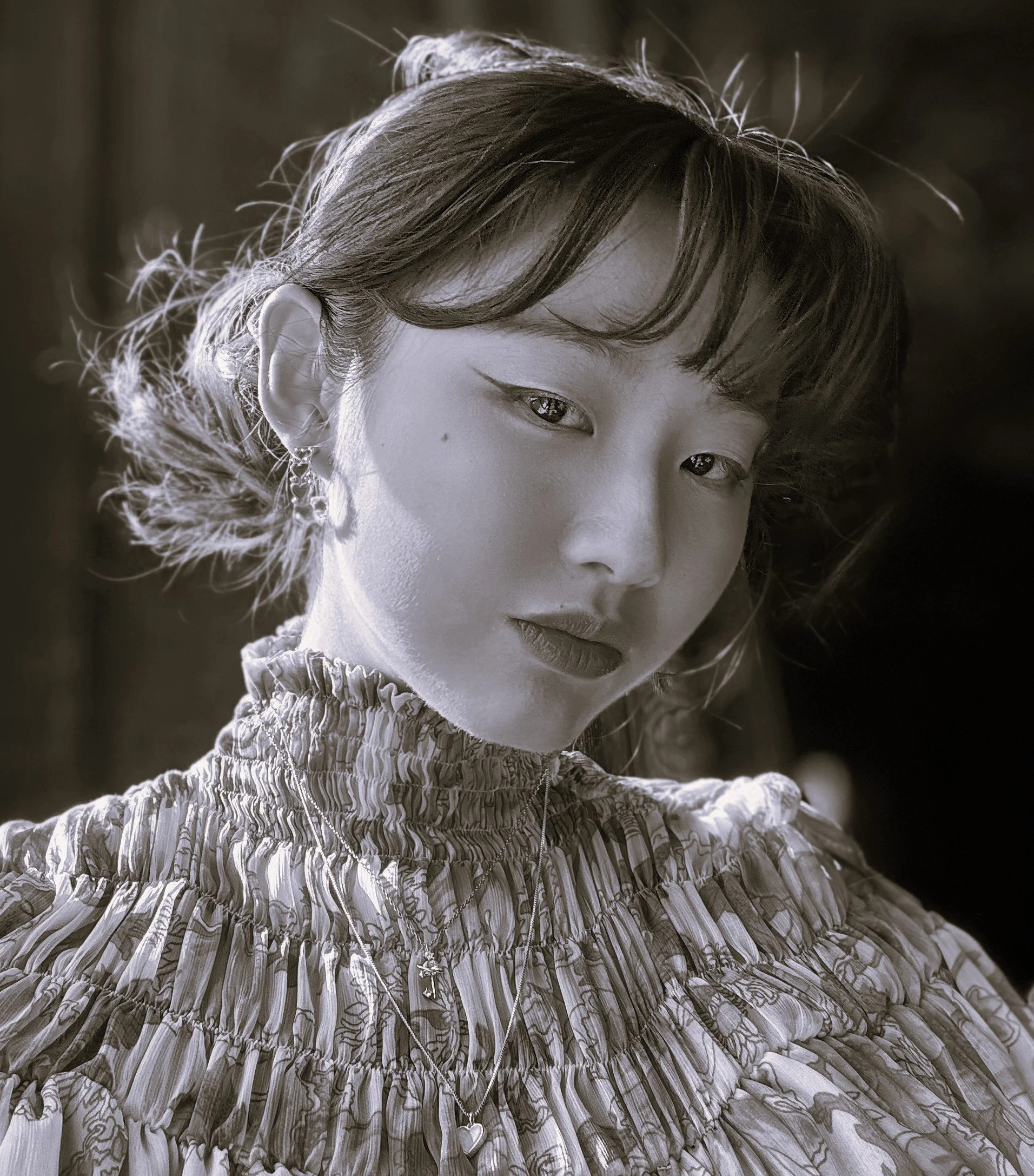
Yvette’s short story Awaking will be featured in Pynewood’s upcoming anthology, Psithur, set for release in Jan 2027.
A lot of my writing begins with an image I can’t explain. I hope to start with a destination in mind, but, like a road trip or a late-night convenience-store run, the journey will most likely diverge from what I had planned. An image stays in my head until I transfer its details into words. Only when I begin to expand it do I realise why it has lingered: it reflects something in my subconscious. Rather than always writing about what I consciously want to explore, much of my writing finds me when the time is right.
This process often takes a story somewhere unexpected. I can find myself caught between an idea that might elevate the narrative and one that has emerged simply because I am tired of following the original plan. I have stumbled into light body horror, turned short stories into screenplays, and changed the genre of a piece midway through writing. When I trust the next word that comes to mind, I sometimes uncover something I thought I didn’t have the words to express. Finding it depends on the right headspace, time and story.
Part of learning to trust this process has been reconsidering what language can do. Gertrude Stein’s writing introduced me to a form of English and creative writing I hadn’t known was possible. Her poems, prose portraits and vignettes opened up possibilities beyond the grammatical strictness I had encountered in academic settings and language examinations, including those required for visa applications.
I found joy in manipulating words and disobeying the official structures of language: swapping lexical classes, prioritising lyricism over efficiency, and treating written language as a collection of ever-changing symbols. Where Stein’s work has been interpreted as a feminist articulation of patriarchal language, my own writing incorporates Chinese grammar, Cantonese cadences and direct translations from the languages I speak alongside English. Through these interventions, I attempt to decolonise a language thrust upon my home and find a more honest representation of identity.
I am interested in what happens when words are borrowed, fragmented and reworked, allowing the structures and meanings of one language to enter another.
My short story, Awaking, which will be featured in Pynewood’s upcoming Psithur publication, centres around the conflict between Needs and Wants, drawing on verbal cubism.
In one passage I wrote, ‘N is a skilled ploy, who has Becoming roasting’. I wanted to suggest that N had become trapped within rules they perceived as rigidly definite, while still retaining the possibility of growth. The phrase draws on the Chinese characters for maturing (成熟): 成 can mean becoming, completing or succeeding, while 熟 can mean cooked through, familiar or skilful.
By working with these overlapping, meanings rather than relying on a direct translation, I hoped to find a way of expressing something that conventional English might not readily accommodate.
A similar approach appears in the phrase ‘N might go hahaha, and not haaaaaaaaaaAAAA’. The expressions, ‘Ha Ha Big Laugh’, and ‘Ai Sound Sighing’, draw on conversational Chinese, where sounds are naturally incorporated into speech. I am interested in how these linguistic forms can carry into English something that a more conventional translation might leave behind.
The final edit of this piece was a more restrained exploration of the ideas and inspiration I have gained from Stein’s work than I had initially imagined. Much of the experimental writing had been cut, leaving me with a clearer sense of how far my current work sits from the voice and style I hope to develop. I am grateful to be collaborating with an editor and publisher interested in unconventional storytelling, and I hope to bring these experiments in language more fully into future work.
More from The Psithur Project
Esi · Yuki Asamura · Matt Elphick
Next week we feature poet Alice Hlidkova, author of Margins & Ledgers.