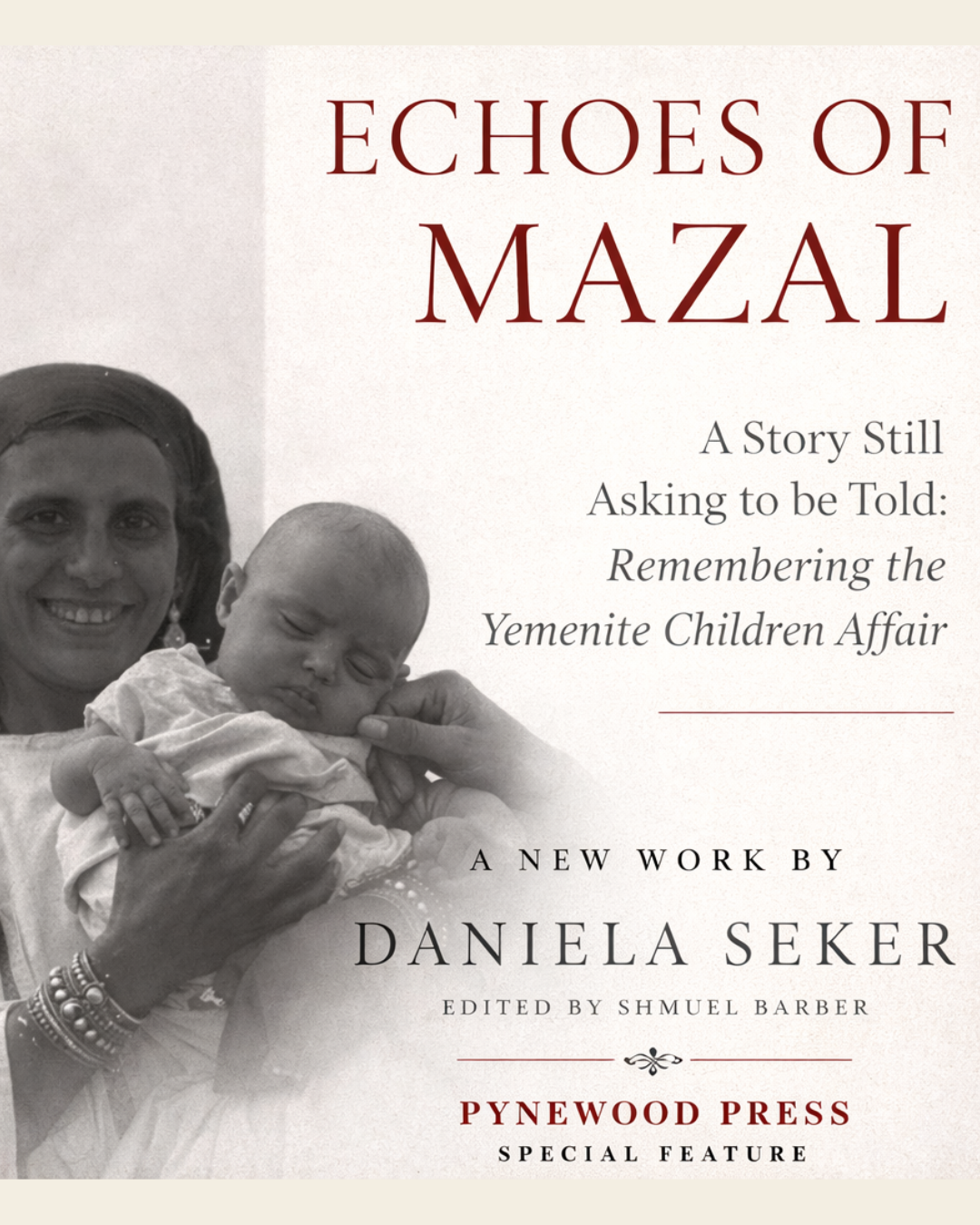
The Yemenite Children Affair – An Open Wound and a Universal Story.
Pynewood Press is proud to announce the upcoming release of Echoes of Mazal - In Search of Yona, a profound new work of historical fiction by Daniela Seker. Inspired by the harrowing true events of the Yemenite Children Affair, Seker’s narrative breathes life into the archival silence, following one family’s decades-long search for a truth among the chaos. The following article explores the historical gravity and heartbreak that define this enduring mystery.
Written by Daniela Seker
Edited by Tim Footman
⭗
Between 1948 and 1954, thousands of infants and young children of immigrants to the newly-formed state of Israel disappeared. Around two-thirds of them were from Yemenite Jewish families. In most cases, the children were hospitalised in immigrant camps or medical institutions. Their parents were told that the children had died and been buried. Yet many families question this account to this day, believing their children were taken from them under murky circumstances.
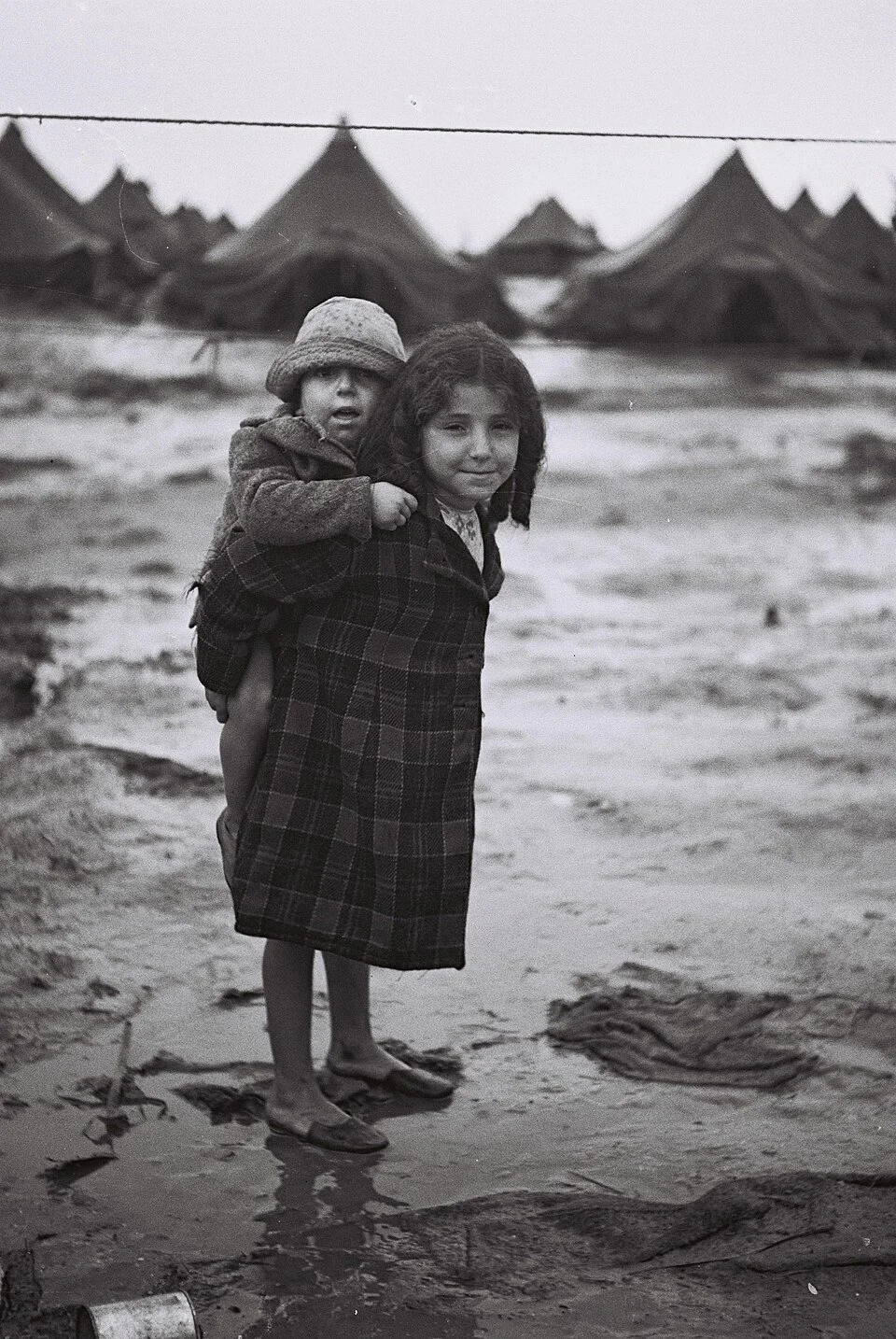
A young girl carrying her brother walking through the mud at the Beit Lid camp, Israel. (Photo by Zoltan Kluger, 1950. Courtesy of the Government Press Office (GPO), Israel. Public Domain)
Behind this dry definition lie thousands of shattered lives. Mothers who returned to empty tents. Fathers who never stopped asking. Families left with a single question: Where is our child?
A close friend, whom I will call Y.Y., was perhaps three years old when his parents, new immigrants, began travelling across the country in search of their baby daughter who had disappeared. They had arrived with deep faith and belief, but without language, without connections, and without power in the face of the systems around them. They lived in harsh conditions in Rosh HaAyin, moving from office to office, from institution to institution, with the same quiet terror always in the background.
Because every missing child is an entire world. And every family left without answers is a story still asking to be told.’
In their case, the story ended with a relatively “good” ending. Their baby was found in Jerusalem, in a WIZO children’s home. Even then, the intentions surrounding her placement were unclear. Their family was reunited, but for many other families, no answers were found. No grave. No child.
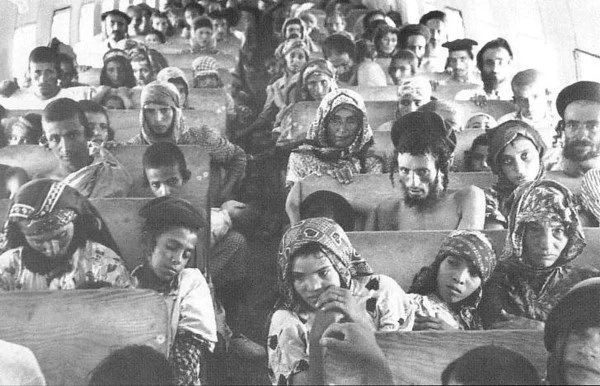
New arrivals from Yemen, 1949. (Source: GPO/Public Domain)
According to state commissions, around 1,000 cases were formally examined. The official conclusion was that most of the children had died, yet even these reports left dozens of cases unresolved. Research, testimonies, and family organisations point to a far broader and more painful picture, speaking of between 1,000 and 5,000 infants and toddlers who disappeared. Thousands of parents who never saw a body, never received proper documentation, and were denied the chance to say goodbye.
Beyond the numbers, the Yemenite Children Affair is a story of families who carried their grief in silence, of unanswered questions passed from one generation to the next, and of wounds that never fully closed.
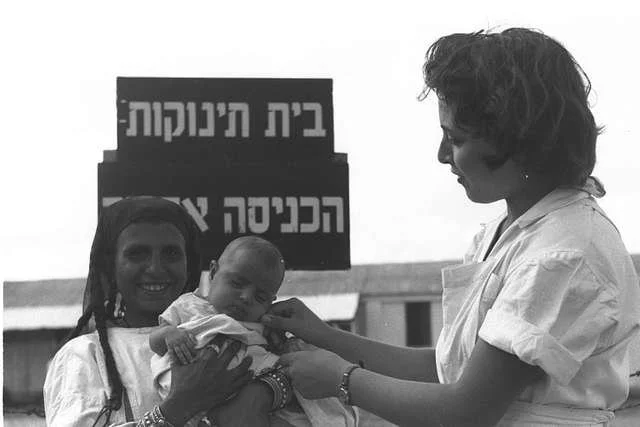
Nurse Victoria Ben Aroyah, who immigrated from Bulgaria, with a habani mother and her child at Ein Shemer in the background is the camp baby home. (Source: Israel Government Press Office)
For the second and third generations, this is not distant history but a living presence: questions of identity, unexplained anxieties, the sense of a family story that was violently interrupted. In recent years, demands have grown for the opening of archives, for fuller understanding and for the public recognition of the pain. Yet beyond investigation, there is a deeper human need: to restore names, faces, and voices to the children who vanished – and to the parents who remained. In this sense, the Yemenite Children Affair is not only an Israeli story. It touches a universal nerve. In Australia and New Zealand, children were taken from Indigenous and Māori families for decades, traumatising many generations.
And alongside history, there is the present. The disappearance of Haymanot Kasau in 2024 reminds us that this kind of pain does not belong only to archives. It unfolds now, in real lives, in living families, in children with faces and names.
Because every missing child is an entire world. And every family left without answers is a story still asking to be told.
⭗
Watch our social media and website for updates on Echoes of Mazal and its cover and release date.